
L&D Conference 2027: What Learning Teams Can Learn at MAD CON?
Here is a question worth sitting with. A creator will reshoot an opening line again and again to keep a stranger watching for three more seconds. That stranger owes them nothing and can leave with one swipe. Your learner sits in the same seat. Someone has told them to finish your course, and their attention can leave just as quickly.
Which of the two crafts has studied attention harder?
That question sits underneath MAD CON 2027. On January 21 in Bengaluru, across 30+ sessions in Creators, Brands and Learning tracks, creators come to make better content, get it seen and turn it into results. We think L&D belongs in that room too, so Nano LMS is hosting a session for the L&D community and bringing scenario-based learning, AI Roleplay and the launch of Agent Max with it.
Creators solved attention first. L&D is next…
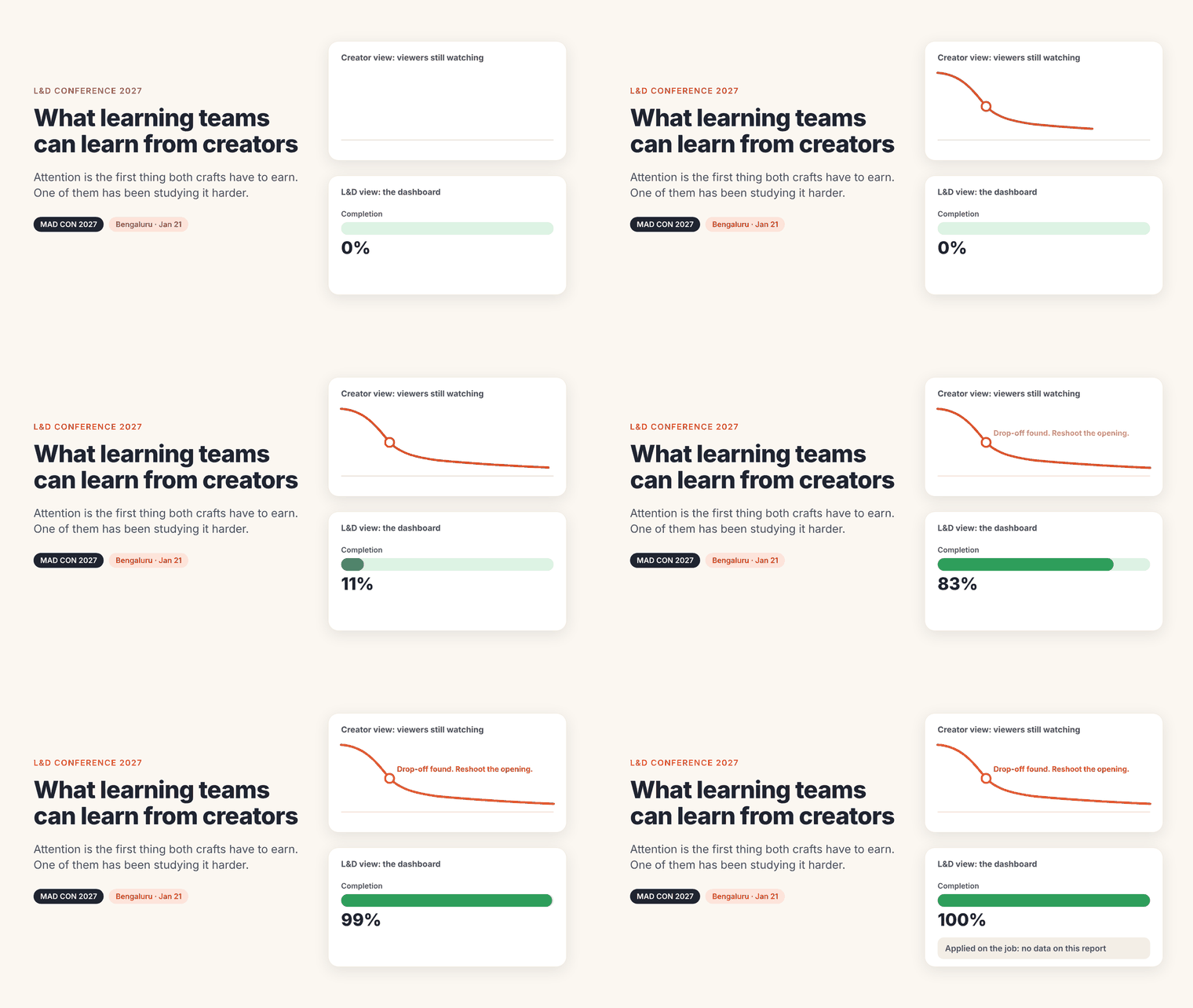
Both crafts need attention that nobody owes them. Telling a learner to finish a course gets you their presence, and their attention can still leave as fast as a viewer swiping away. Creators know exactly when it leaves, because they can see the second viewers drop off and fix it. L&D usually gets one number, completion, which shows who reached the last slide and says nothing about attention or behavior. A course can hit 100% and change nothing.
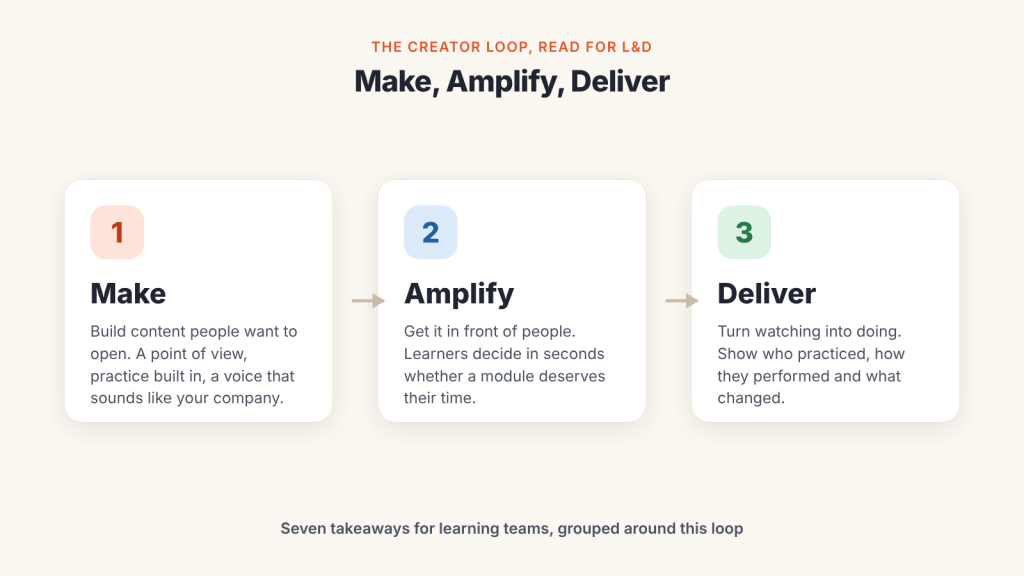
Meanwhile your learner spends much of the day in feeds built by people who studied attention for a living, and your onboarding module sits one swipe away from them. That is the standard you get measured against, so it makes sense to borrow from the people who set it. MAD CON’s Make, Amplify, Deliver gives us a way to do that, and the seven sections below read each part through an L&D lens.
1. Hands-on labs and scenario-based learning: practice is the product
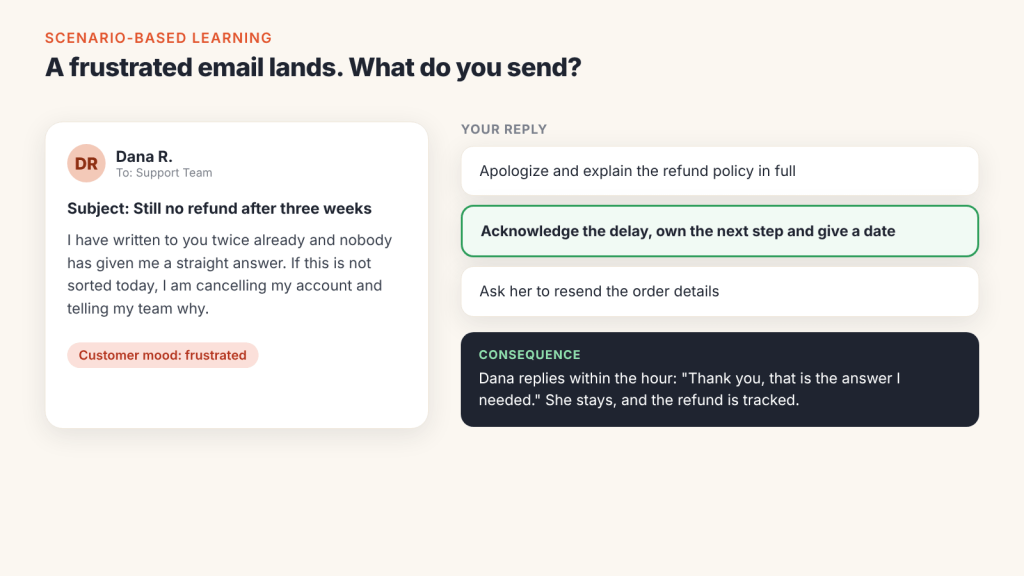
MAD CON puts you in a lab with experts beside you and sends you home with something finished. Corporate learning should work the same way. People remember the decision they made far longer than the video they watched.
That is the case for scenario-based learning. In Nano LMS, a learner steps into a real situation, makes a call and sees the consequence. The example below is a customer service scenario: a frustrated email lands and the learner chooses how to respond. The format should follow the skill, which is why Nano LMS supports nine scenario formats, from branching conversations to chat simulations and guided hotspots.
2. The AI toolkit: speed is easy, voice is the work
Anyone can generate a course in minutes now. Nano LMS builds a first draft in 3 to 5 minutes. The draft is the easy part. AI-drafted courses start to sound alike, and learners notice by lesson two, so the craft sits in the second pass.
Agent Max is the chat assistant inside the Nano LMS lesson builder. Describe the lesson, then refine it by chatting until it sounds like your company. It is built for trainers, and learners never see it. We are launching it at MAD CON.
3. Training that works: AI roleplay for the hard conversation
MAD CON has a session aimed squarely at L&D on learning people finish and use. Our view: most training tells people what good looks like and gives them nowhere to rehearse it.
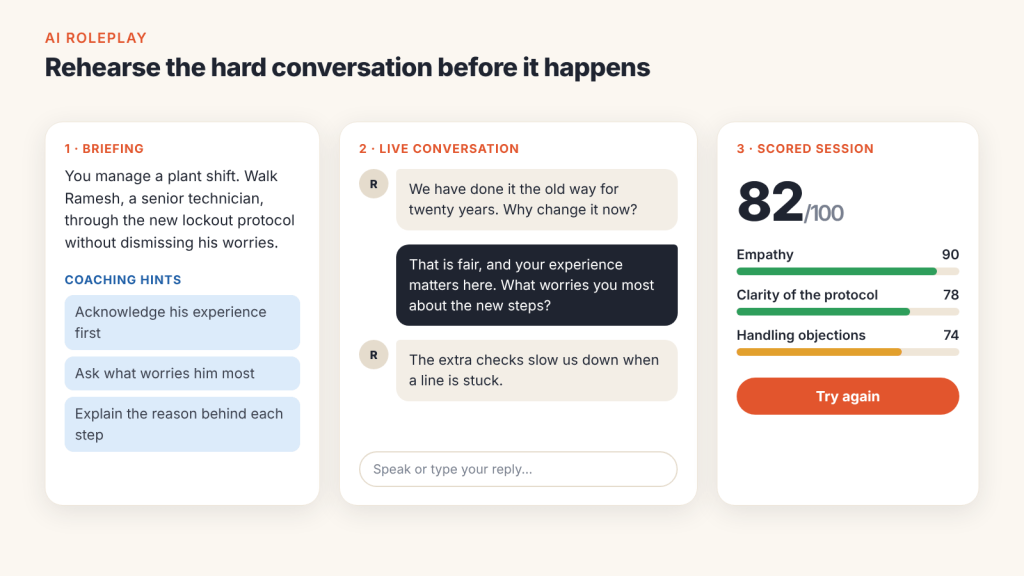
AI Roleplay is the rehearsal room. The learner reads a scenario briefing, gets coaching hints and speaks with an AI character who responds to what they say. In the example below, a manager has to talk a concerned senior technician through a new safety protocol without dismissing his worries. The session is scored, so the learner can try again.
4. Prove your results: evidence wins budgets
The measurement session teaches you to show what your content does, so the next budget is easier to win. Bring the question your CFO will ask: what did we get for this? A completion tick cannot answer it. Scored roleplay sessions show who practiced and how they performed, and a finance lead can read that.
5. Content Clinic: ask for the roast
Creators get critique every day in the comments. L&D teams rarely get any. Bring your weakest course to the Content Clinic and let experts tell you the truth, kindly or not. Then fix it: describe the change to Agent Max in chat and refine the lesson from there.
6. Meet the decision-makers: get in the room
MAD CON brings senior executives from top companies: CEOs, CMOs, CLOs and marketing heads. Learning leaders rarely sit with the people who control budget and attention. Use the time. Ask the CLOs how they decide what gets funded. Ask the marketing heads how they hold an audience.
Nano LMS comes from Animaker, whose AI creation tools serve over 35 million users worldwide, so we will gladly talk about what AI in learning looks like after the demo.
7. Three tracks, 30+ sessions: pick Learning, borrow from the rest
L&D teams will spend most of their time in the Learning track. Spend some time in the Make and Amplify sessions too, because a course that looks and sounds like good creator content gets watched. Then take the playbooks home and start your next 10x the following morning.
Where this is heading
We expect the line between creator and trainer to keep fading. Both earn attention and then change what people do. Scenario-based learning puts learners inside the decision, AI Roleplay lets them rehearse the conversation and Agent Max lets trainers shape the course in chat. Nano LMS is the AI learning platform for teams that judge training by what learners do.
Register for MAD CON 2027 here. Come find us, and bring a course you want to fix.
FAQs
1. When and where is MAD CON 2027?
MAD CON 2027 takes place on January 21 in Bengaluru. It runs 30+ sessions across three tracks: Creators, Brands and Learning.
2. Why should L&D teams attend a creator conference?
Creators are paid in attention, so they study how to hold it. Learning teams can borrow that craft to make training people finish and apply. The Learning track covers L&D directly, and the Make and Amplify sessions show how to build content that gets watched.
3. What is scenario-based learning?
Scenario-based learning puts a learner in a realistic situation, asks them to make a decision and shows the consequence. Nano LMS supports nine scenario formats, including branching conversations, chat simulations and guided hotspots.
4. What is AI roleplay training?
AI roleplay lets a learner rehearse a hard conversation with an AI character. The learner reads a scenario briefing, gets coaching hints and speaks with a character who responds to what they say. The session is scored, so they can try again.