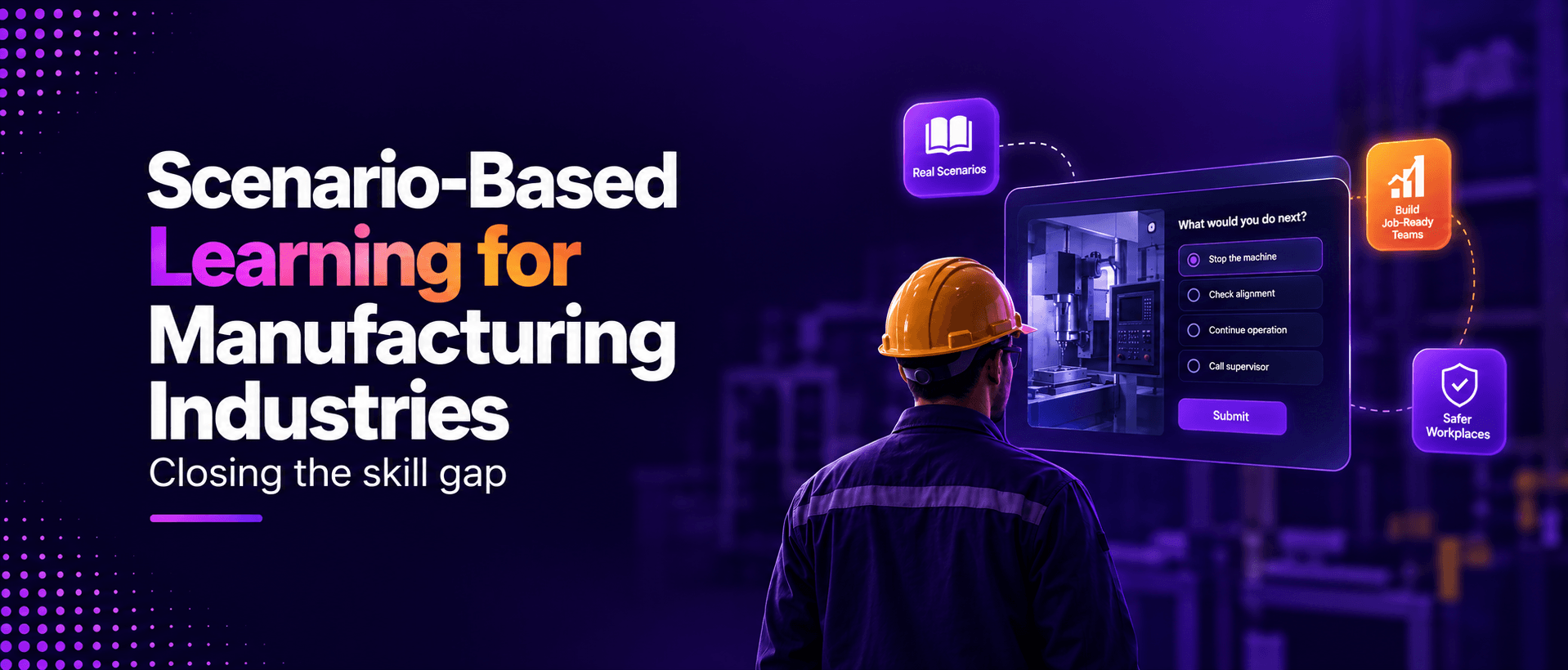

Scenario-Based Learning for Manufacturing Industries: Closing the Skill Gap
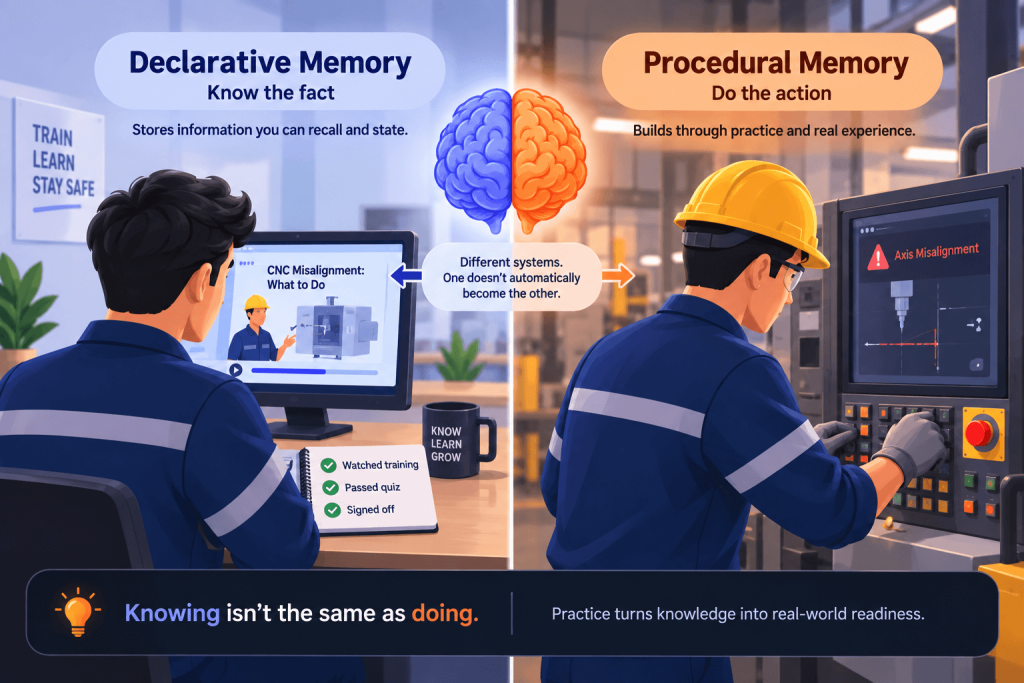
Just think about this situation, it's 6 a.m. and a new machine operator is running his first solo shift. He watched the safety video during onboarding, he also passed the quiz, and his supervisor signed off, everything on paper says he's ready.
But…
Twenty minutes in, the CNC machine throws a misalignment, nothing dramatic, just enough of a deviation that it needs a decision, fast.
Here is where the operator starts hesitating. He's seen this covered in a slide once, he's never had to actually respond to it.
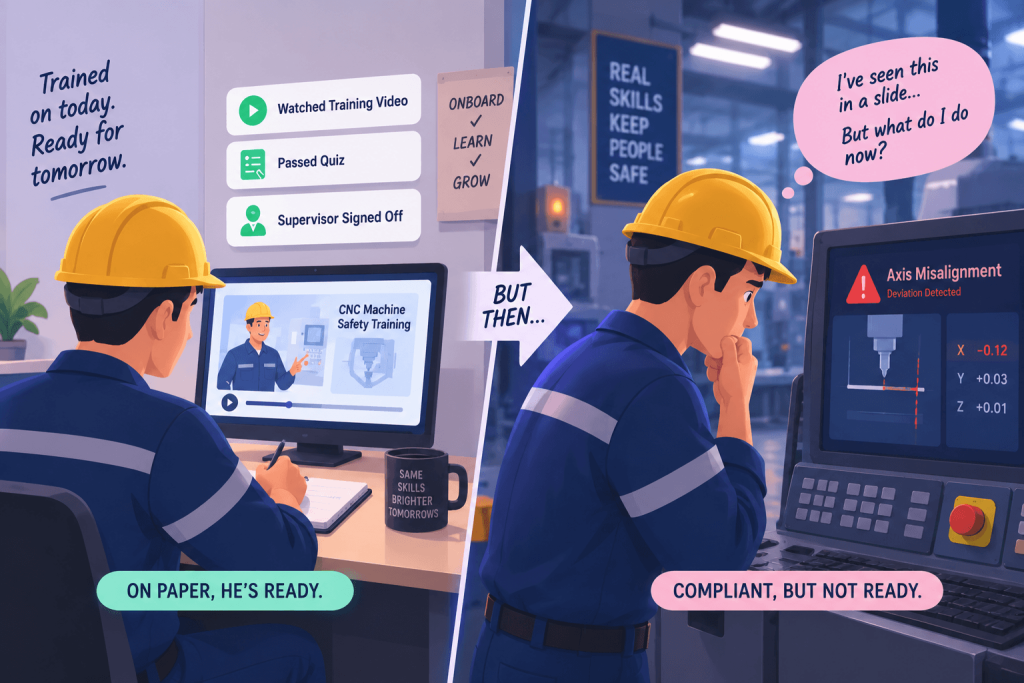
He was compliant, but he wasn't ready.
The industry has a training gap, not just a company-by-company one…
That moment shows up across the industry, not just in one shift or one plant. It's a pattern built from treating training as a compliance function instead of a workforce-development one.
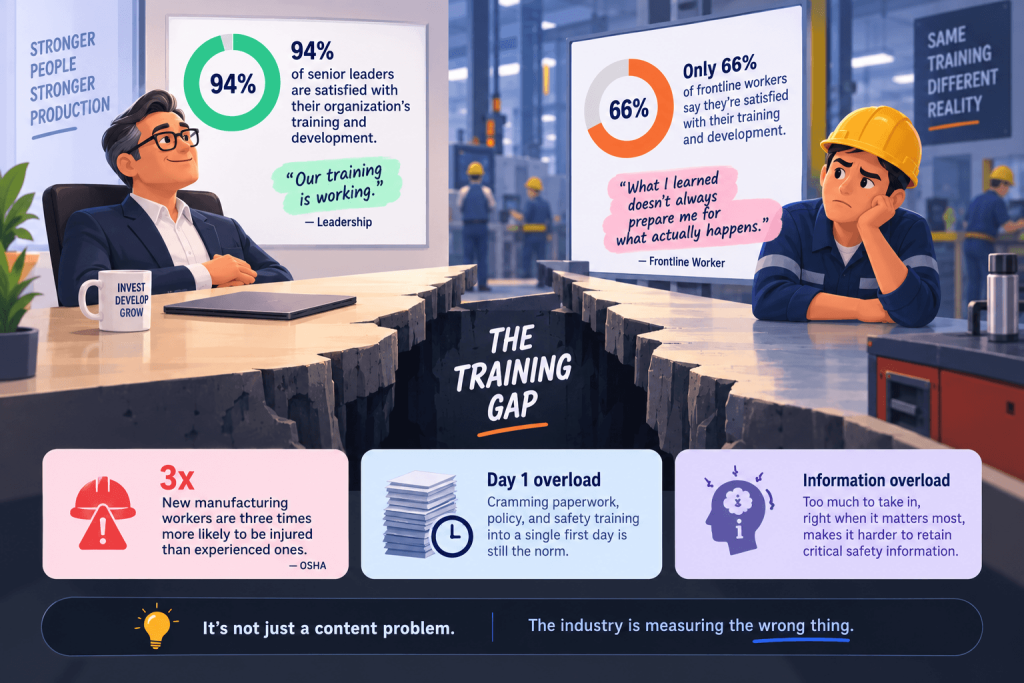
The gap shows up clearly in how differently leadership and the floor see it. According to the Manufacturing Institute, 94% of senior leaders say they're satisfied with their organization's training and development. Although, only 66% of frontline workers say the same.
Leadership believes training is working. The floor is living a different reality, and that gap is the industry-wide version of watched vs. can do.
The stakes behind it are real.
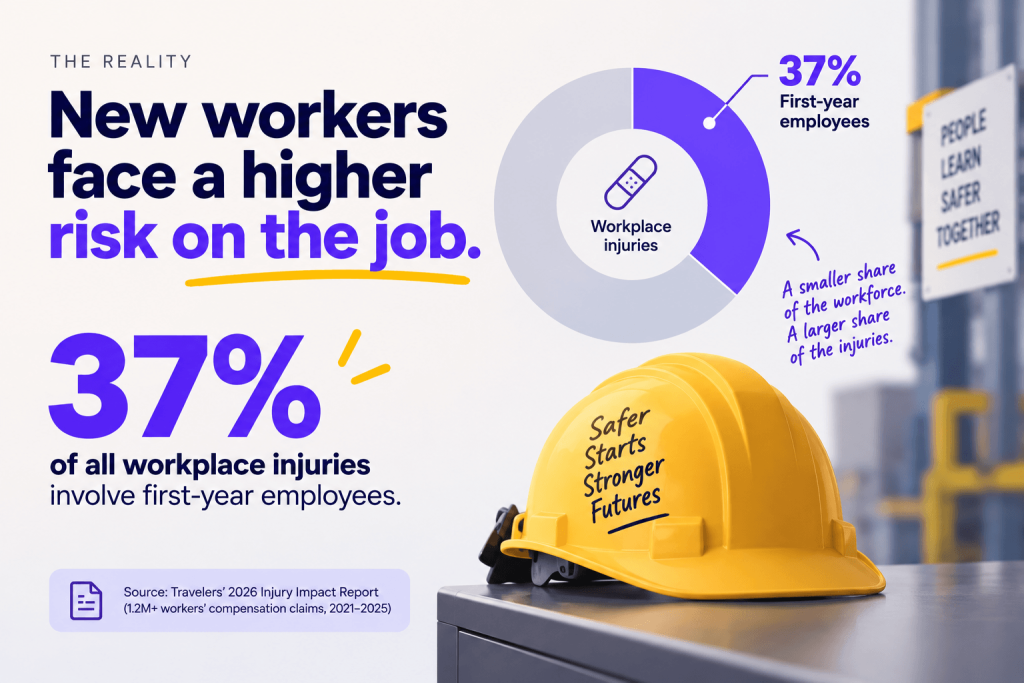
In manufacturing specifically, injured workers now miss an average of 76 workdays per incident. And the way most plants still run onboarding doesn't help: cramming paperwork, policy, and safety training into a single first day creates information overload right when retaining that safety information matters most. Even the "watched" part of watched vs. can do gets undercut before a new hire ever reaches the floor.
Manufacturers already have the training content. What most plants are missing is a way to measure whether it actually transferred to the floor.
Why scenario-based training closes that gap?
Scenario-based training delivers meaningfully faster time-to-competency than traditional formats, according to Brandon Hall Group research. The reason comes down to what each format actually trains.
- A quiz measures recall: can a worker remember what the slide said.
- A scenario measures decision-making under the same kind of pressure the job creates: can a worker act on what he knows when it counts.
An operator who can recite the safety procedure but freezes at the first live misalignment hasn't failed to learn the material. He's failed to practice using it.
Three scenarios make that gap visible, each one run two ways: the traditional path, and what changes when scenario-based learning (SBL) or roleplay replaces it.
Scenario 1: The new operator, CNC misalignment
- Traditional path: A new hire watches a safety video covering machine operation and common fault conditions. He passes a multiple-choice quiz. He gets signed off for floor access. The first time he actually sees a misalignment, it's live, on a real machine, with real consequences attached to whatever he decides next.
- Scenario-based path: Before he ever touches the machine solo, he runs the misalignment as a simulated scenario. He has to notice it, decide what to do, and live with the outcome of that decision, in an environment where getting it wrong costs nothing but a retry. By the time the real version shows up, he's already made the call once.
Traditional training tests memory.
Scenario-based training tests response. Those are different skills, and only one of them is what the job actually requires at 6 a.m. on a solo shift.
Scenario 2: The supervisor, shutdown-and-escalation
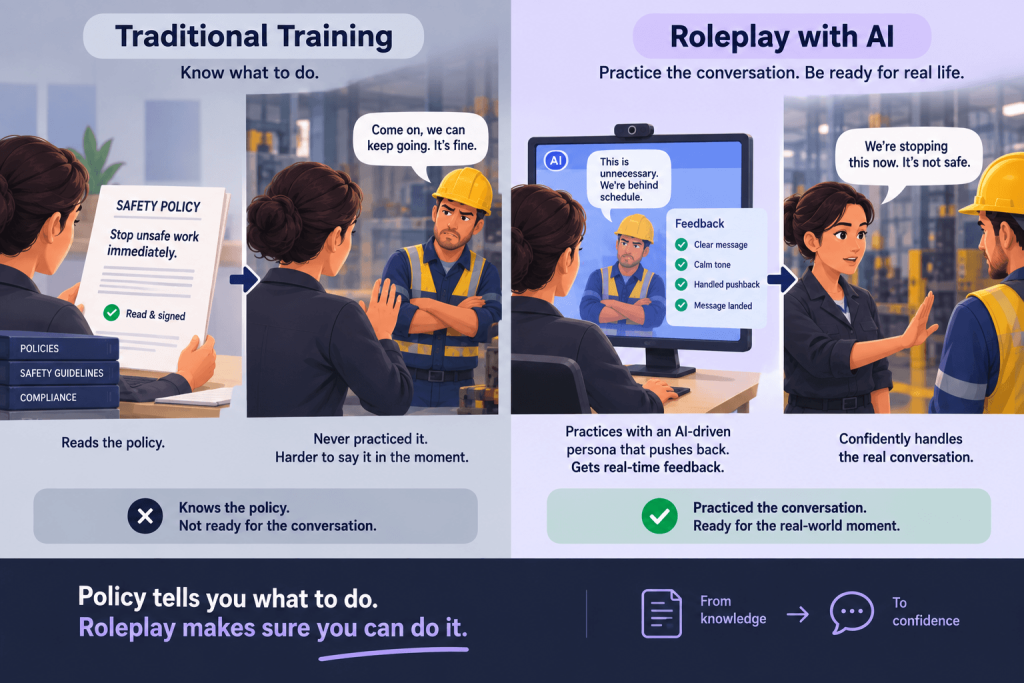
- Traditional path: The safety policy is unambiguous: stop unsafe work immediately. A supervisor has read it, signed it, and can recite it. What she's never done is say it out loud to a worker who doesn't want to hear it, mid-shift, with production pressure in the room.
- Roleplay path: She practices the actual conversation with an AI-driven persona built to push back the way a real, distracted operator would. She gets feedback on her tone, her clarity, and whether the message actually landed or just got acknowledged. She rehearses the hard version of the conversation before she ever needs it for real.
Policy tells a supervisor what to do. Roleplay tests whether she can actually do it, under the kind of resistance a policy document never has to face.
Scenario 3: The multilingual crew, equipment malfunction
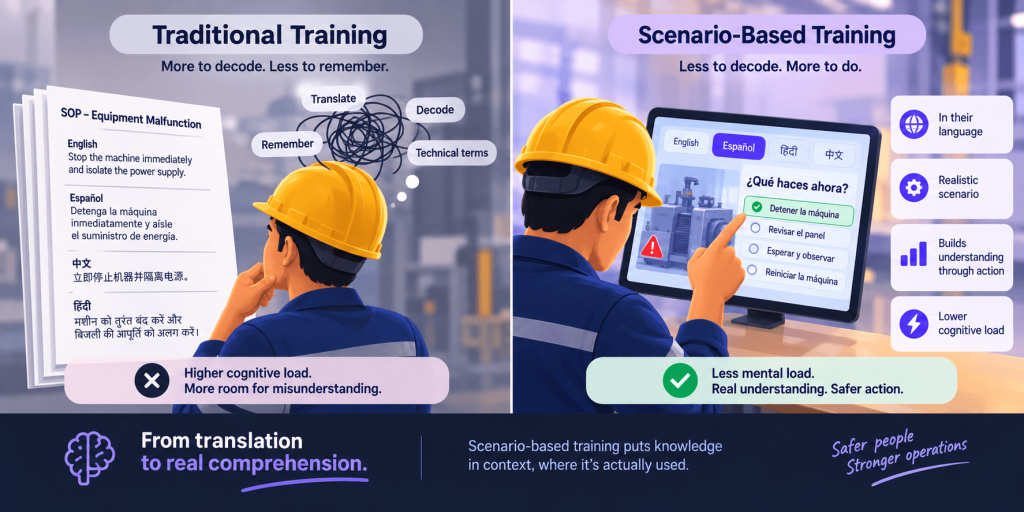
- Traditional path: One SOP document, translated once, is assumed to cover comprehension for every language spoken on the floor. Nobody checks whether it actually does until something goes wrong.
- Multilingual scenario-based path: The same equipment-malfunction situation runs as a scenario in a worker's primary language, and comprehension gets checked through the decisions he makes inside the scenario, rather than a translated quiz he can pass without fully understanding the material.
This isn't a hypothetical gap. English-proficiency gaps are manufacturers' most cited workforce challenge, according to a Manufacturing Institute survey of more than 6,000 employers. Translating a document once confirms it was translated. Checking whether a worker understood it requires watching what he does with it under pressure.
Why the first weeks matter most
A third of new-hire manufacturing turnover happens in the first 30 days. Replacing one manufacturing employee costs $20,000 to $40,000, a number that shows up as a line item on a P&L.
Slow ramp-up compounds it. If a plant needs a certain number of fully productive workers by a given date and ramp-up takes longer than the plan assumed, the output target gets missed along with the training goal.
And the group manufacturers most need to retain is the group most explicitly asking for better training: workers under 25 cite training specifically as a reason for staying at nearly double the rate of the workforce overall, 69% versus 42%, according to Manufacturing Institute and APA research.
Underinvesting in how training is delivered is a safety risk combined with a retention and output risk, all at once, all inside the same first few weeks.
How to know it's actually working?
Course completion rates prove attendance, not outcome. That's the same mistake behind the leadership-versus-frontline satisfaction gap from earlier in this piece: leadership sees completions and assumes training worked. The floor experiences whether it actually did.
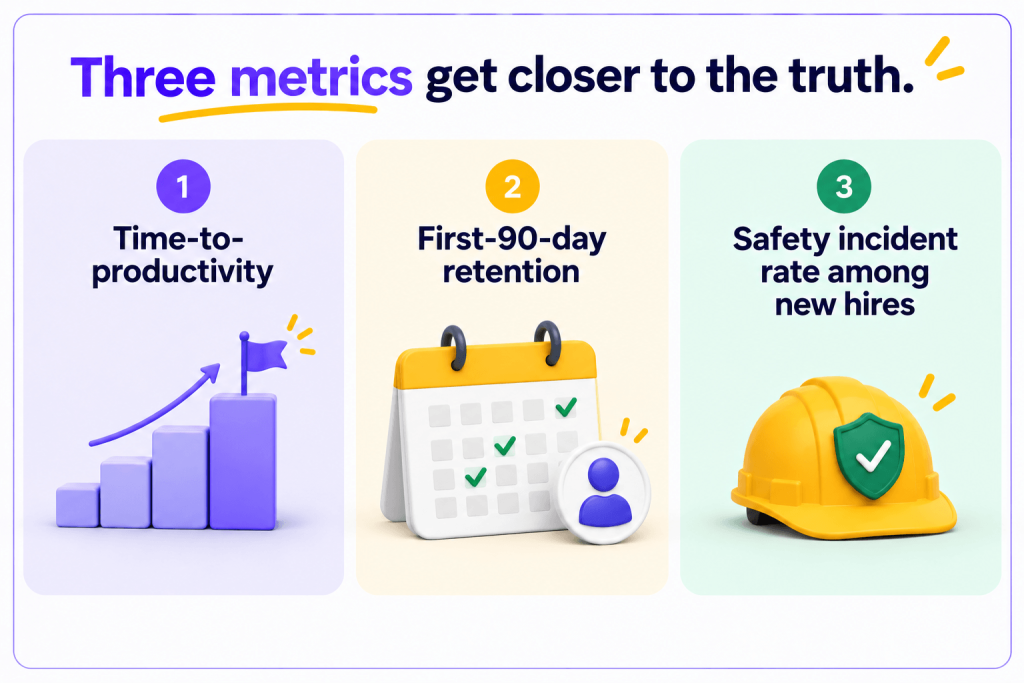
- Time-to-productivity: How long it actually takes a new hire to hit full output or quality standards after finishing a course. Example: a new CNC operator gets cleared for solo shifts on day one, but it still takes him six weeks of shadowed shifts before he's running at full line speed without errors. That six-week gap, not the sign-off date, is the real measure of when the training worked.
- First-90-day retention: Tracked specifically for new hires, not blended into the plant's overall turnover number. Example: a plant hires 40 new operators in a quarter and 12 leave before day 90. That's a 30% first-90-day attrition rate, a number that can hide inside an annual turnover figure that looks fine because veteran staff rarely leave.
- Safety incident rate among new hires: Broken out from the plant's overall rate, so it's possible to see whether training is closing the early-tenure risk gap or just checking a box. Example: new hires make up 15% of the workforce but account for 40% of recordable injuries in a given year. That gap points straight to where training is falling short, even while the plant's overall injury rate looks stable.
A program that can't report on these three metrics is still counting who showed up to training, not who's actually ready for the floor.
Closing the gap, industry-wide
Manufacturing's training gap comes from a design choice made decades ago: onboarding built to prove attendance, running headfirst into a job that demands split-second decisions.
That design choice is also why leadership and the floor see the industry so differently.
When 94% of leaders call training a success and only 66% of frontline workers agree, both groups are telling the truth.
- Leaders are measuring whether training happened.
- Workers are living with whether it worked.
Closing that gap means changing what training tests, from recall to response. Scenario-based learning is how that shift actually happens on the floor, and it's why plants running SBL well are starting to see leadership and frontline numbers move closer together instead of further apart.
Why AI is the part that makes this scale?
Building that kind of practice used to be expensive. Each one of these used to take instructional designers weeks to build:
- A realistic CNC misalignment scenario.
- A supervisor confrontation with a persona that pushes back convincingly.
- A fully localized equipment scenario in a worker's own language.
Most plants ran a handful of scenarios at most and called it a program.
AI is what's changing that math across the industry. AI-generated scenarios and AI-driven roleplay personas cut production time down enough that plants can build training around the failure points their own floor actually has, the misalignment their line keeps throwing, the conversation their supervisors keep avoiding, rather than one generic video and a quiz that has to cover everyone.
Nano LMS is one of the platforms driving that shift for manufacturing specifically, treating scenario-based learning and roleplay as the default way to train, not an add-on bolted onto a standard course library.
The bottom line
Watched proves a worker sat through training. Can-do proves he's ready for the floor.
Manufacturing's training gap won't close through more content or better slides. It closes when plants can afford to let every worker practice the moment before it happens for real, and AI is what's finally putting that within reach at industry scale.
FAQs
- What is scenario-based learning in manufacturing training?
Scenario-based learning puts a worker through a simulated version of a real shop-floor situation, a misalignment, an escalation, a malfunction, before they face it live. They have to notice the problem, decide, and see the outcome. That's different from a video and quiz, which only test whether the content was remembered. - Why do manufacturing workers fail on the floor even after passing training?
Most onboarding tests recall, not response. A worker can watch a safety video, pass a multiple-choice quiz, and get signed off, and still freeze the first time a real deviation shows up. Compliant isn't the same as ready. The fix is practicing the decision before it happens for real. - What's the difference between compliance training and workforce readiness?
Compliance training proves someone sat through content. Readiness proves the content can be acted on under pressure. Course completion rates measure the former. Time-to-productivity, first-90-day retention, and new-hire safety incident rate measure the latter. - How much does manufacturing turnover cost in the first 90 days?Replacing one manufacturing employee runs $20,000 to $40,000, and a third of new-hire turnover happens in the first 30 days. Workers under 25 cite training quality as a reason for staying at nearly double the rate of the workforce overall.
- Can AI roleplay train supervisors for difficult conversations?
Yes. An AI-driven persona built to push back the way a real operator would lets a supervisor rehearse a shutdown-and-escalation conversation before it's needed for real, with feedback on tone and clarity rather than just whether the policy can be recited. - How do you train a multilingual manufacturing workforce effectively?
Translating an SOP once only confirms it was translated, not understood. English-proficiency gaps are manufacturers' most cited workforce challenge. Running the same scenario in a worker's primary language and checking comprehension through the decisions made inside it catches gaps a translated quiz won't. - What metrics show if manufacturing training actually worked
Three: time-to-productivity (how long until a new hire hits full output without errors), first-90-day retention tracked separately from overall turnover, and new-hire safety incident rate broken out from the plant-wide rate. Completion rate isn't one of them.