
The 5 Free LMS Platforms Worth Actually Trying in 2026 (And the Ones That'll Waste Your Weekend)
I've been knee-deep in LMS evaluations for the last few months and let me save you some time - "free" means about seventeen different things in this space.
Some platforms are free but require you to set up your own server, which is "free" in the same way a free puppy is free. Some are free with such aggressive limits that you'll outgrow them in a week. And a few are genuinely free in the way you'd want — usable, supported, with real features.
Here's what I actually found, tested, broken, and in some cases sworn at.
1. Moodle
Rating: 6.5/10
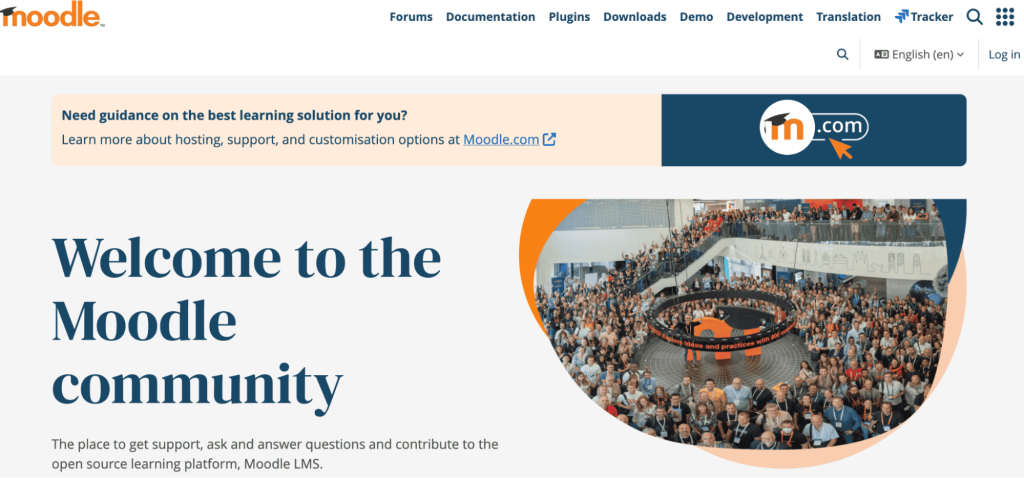
Moodle has been around since 2002 which is either a compliment or a warning depending on how you look at it. It's the most widely used open-source LMS in the world, mostly because universities adopted it and never left.
The interface looks like it. There's no way to sugarcoat that.
Real world example: A friend who runs training for a 200-person nonprofit set this up. It took her IT contractor about 3 weeks to get it stable, another 2 weeks of theme tweaking to make it not look like 2008, and now it runs fine. She likes it. Her learners tolerate it. The bill is essentially zero apart from hosting.
The honest concern: "Free" Moodle is only free if you have someone technical to set it up. If you're a one-person L&D team and the words "subdomain" or "PHP version" make you uncomfortable, this isn't really free for you. It's a project. A real one.
It also genuinely struggles with modern training needs - there's no AI, the mobile experience is rough, and you'll find yourself learning more about plugin compatibility than instructional design.
2. Chamilo
Rating: 6/10
Chamilo is what Moodle would be if it had a friendlier designer. Same open-source roots, easier to use, much smaller community.
That last part matters more than it sounds. Smaller community means fewer plugins, fewer tutorials when something breaks, and fewer people on Reddit who can help you when you're stuck at 11pm.
Real world example: I came across a small Spanish-language training provider using Chamilo for their certificate courses. It worked. They liked it. But when I asked "what happens when you want to add X feature?" the answer was basically "we wait or we don't."
The honest concern: It's a Tuesday-afternoon platform. Fine for stable, predictable training. Painful the moment you need something custom.
3. Google Classroom
Rating: 7/10 (for the right use case)
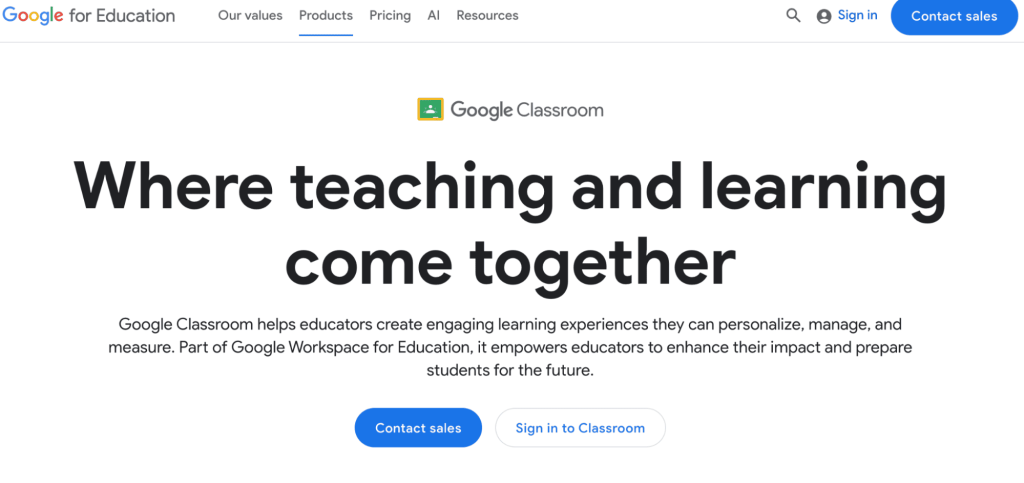
I include this with a caveat — Google Classroom isn't really an LMS. It's a homework distribution tool that got mistaken for one.
For schools, it's excellent. For corporate training, it's like using a butter knife to assemble furniture. You can make it work but you'll wonder if there was a better tool the whole time.
Real world example: A few small companies I know use Classroom because they're already on Google Workspace and "free" felt right. They all eventually moved off it when they hit the same wall — no completion tracking, no certificates, no real reporting, and the learner experience feels like submitting an assignment.
The honest concern: It's only free because you're already paying for Workspace. And if your training needs include anything beyond "send link, expect completion," you'll outgrow it within a quarter.
4. Canvas LMS (Free for Teachers)
Rating: 7.5/10 (but read the fine print)
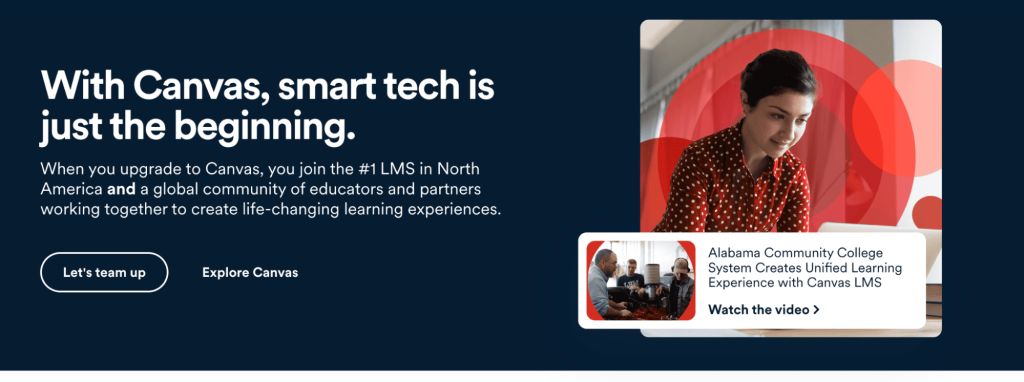
Canvas is genuinely good software. The interface is clean, the experience is polished, it's well-built. The catch is that "free Canvas" means Free for Teachers — designed for individual educators, not organizations.
Real world example: I've seen solo trainers use it to run workshop content. Works great. Looks professional. But the moment you need multiple admins, branded certificates, or proper team management — you're talking to a sales rep and the "free" stops there.
The honest concern: Canvas is one of those tools that's free in the marketing copy and paid in the practical reality. If you're running corporate training with a team, you're going to need the paid tier within weeks.
5. Nano LMS
Rating: 8.5/10
Full disclosure — we built Nano LMS through a Reddit thread and ended up using it for a few internal training projects. I was skeptical because "AI-powered" is starting to feel like the new "synergy" in software marketing. But it earned the rating.
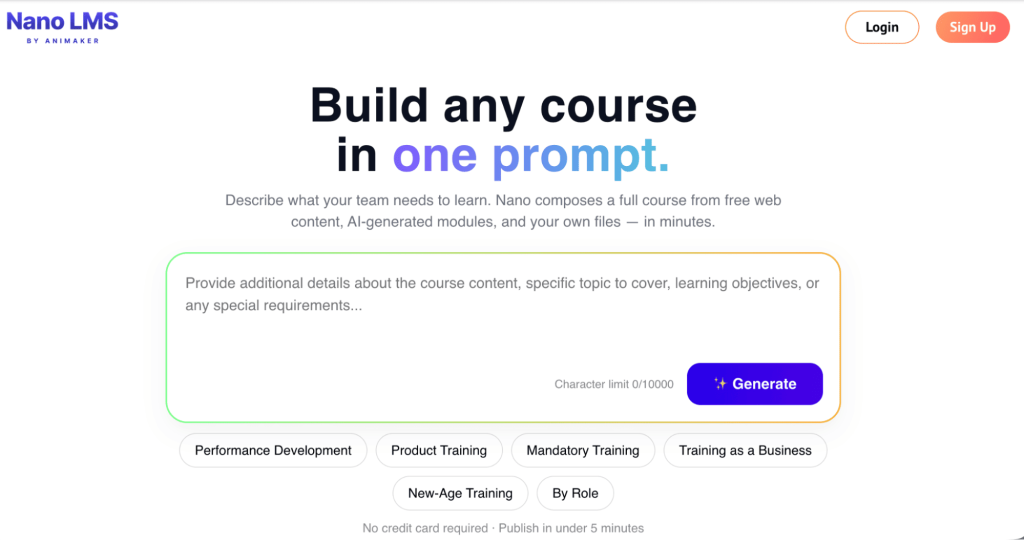
The thing that makes it different is that it's not free-with-asterisks. The free plan is genuinely usable for small teams — 1 trainer, 10 learners, 100 AI credits a month. No credit card. No upgrade nag.
What surprised me was how the AI changed the workflow. Instead of building courses slide by slide, you describe what you want trained on and it generates the structure, content, quizzes, and certificates in a few minutes. Then you edit. The first time I tried it I assumed the output would be garbage. It wasn't. It was the same quality I would have written by hand, just done in 12 minutes instead of 3 hours.
Real world example: A small SaaS team I know used it to build their entire customer onboarding training in an afternoon. They had been sitting on a half-written Notion doc for 8 months. The AI took the doc and turned it into a real course with practice scenarios. Their new customers actually finish it now.
The honest concern: It's newer than the other platforms on this list, so the integrations ecosystem is still growing. If you need deep HRIS sync with a quirky internal tool, you'll likely end up on the Enterprise plan. Also — the AI is good but not magic. If you give it vague instructions you get vague courses. You still have to think about what you're training people on.
So which one should you actually use?
It depends on what you're optimizing for.
If you have technical resources and you're cost-conscious to the bone - Moodle.
If you're a solo educator running structured courses - Canvas Free for Teachers.
If you're already on Google Workspace and your training needs are simple - Google Classroom.
If you want something that genuinely works out of the box with no IT setup and AI doing the boring parts - Nano LMS.
If you want a smaller, simpler alternative to Moodle - Chamilo.
The trap most people fall into is choosing the "freest" option without factoring in their own time. Six weeks of setup and maintenance is not free. It's just billed differently.
Pick the one that gets you to "course delivered, learner finished, manager happy" with the least friction. That's the real metric.
About the Author

R.S Raghavan
Raghav is the Founder and CEO of Animaker, a global AI-enabled creative technology company trusted by over 35 million users worldwide. A passionate builder and product visionary, he has been at the forefront of simplifying video creation and empowering businesses, educators, and creators with accessible storytelling tools.
Under his leadership, Animaker has grown into a multi-product creative suite, including Animaker, Nano LMS, Vmaker AI, Steve AI, Picmaker, and Show, helping individuals and teams produce high-quality videos and marketing content faster through AI-driven workflows.
When he is not working, the thirst for adventure kicks in and you'll find him paragliding or scuba diving.